

Effectiveness of Photo Identification – Vulnerability of Passport Control
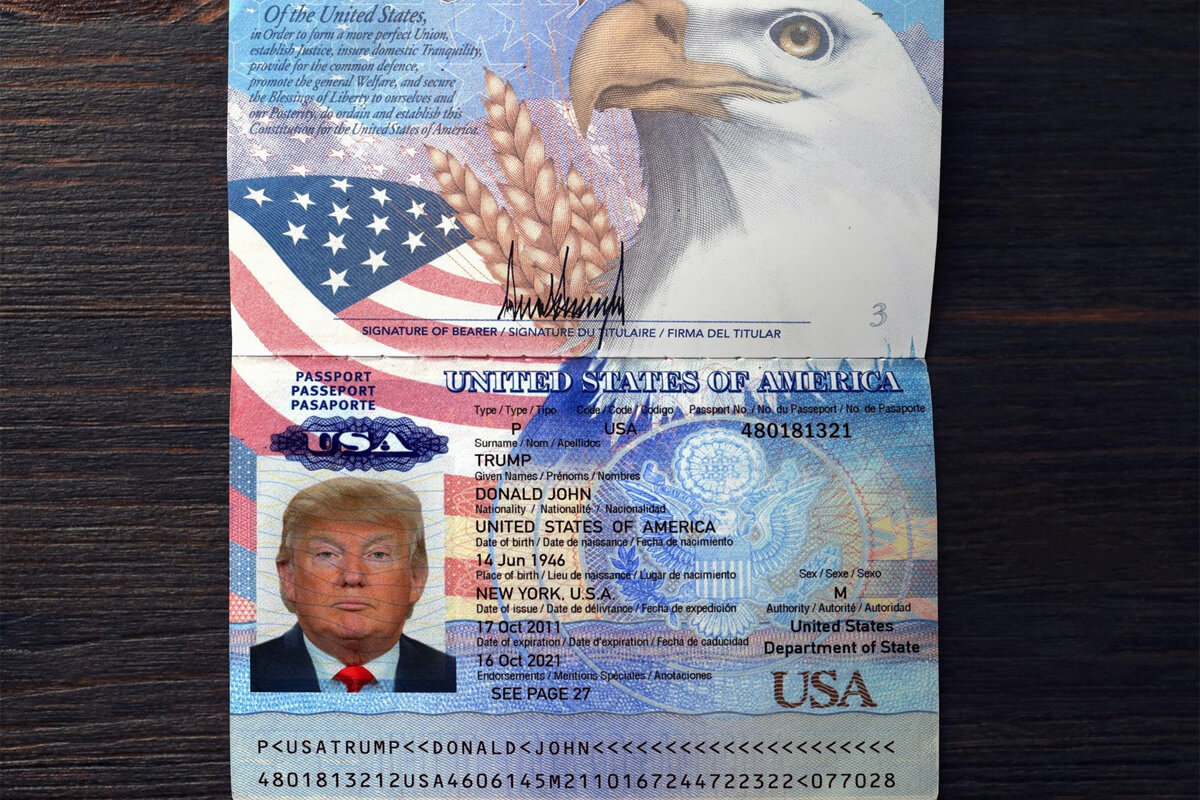
Documents play an important role in the life of a modern person. With their help personal rights are confirmed, property transactions, benefits, cash payments, and so on are made. Inextricably linked to the documents is a procedure for their forgery to solve various problems. A ready-made passport PSD template is used to make a passport without any problems by correcting the information.
Passport, what is it
This is a document certifying the identity of citizens residing in a particular country. It is obligatory to indicate:
- date of birth (date, month, year);
- surname, first name, patronymic,
- place of birth;
- place of residence registration;
- other data.
Each passport is characterized by a different series and number. Depending on its purpose, this document is represented by several types:
- Domestic. Designed for submission on request of banking institutions, government agencies and other state bodies within the country of residence.
- Transnational passport. For travelling abroad; provided at customs and border control points.
Both types of passports are produced on special blanks of standard size, according to a single template established by a particular country. Not only foreign, but also internal passports of some countries, in addition to the main pages, contain inserts with watermarks. Both blanks and inserts are made on special paper containing protection.
To make fake identity documents, a ready-made PSD template passport is used. This is a special format file, which layers are edited in Adobe Photoshop.
Given the presence of a large number of people with fake identity documents, research has been conducted on the effectiveness of photo identification and passport control vulnerabilities.
What the results of the research tell us
According to the results of a new study conducted by a group of psychologists for passport office employees in Australia, it was found that they, just like ordinary people, make mistakes when carrying out the procedure of identifying a real person with a photo in the passport.
The percentage was from 10 to 20% (and this in a laboratory setting). The degree of inaccuracy in real life would be higher, and this suggests that several thousand travelers with fake passports would be missed by customs authorities.
According to one of the psychologists M. Papes, who took part in the study, people often have the impression that they are experts in identification through facial perception. But the study showed just the opposite result.
From this it is clear that in order to ensure the accuracy of security systems, one passport photo is not enough. Based on the disappointing results, this work suggests that security measures should be strengthened by having more than one photo in the passport.
What Factors Affect the Determination of Reliability of Images in Passports
People who rarely encounter fake identity documents are unable to identify them when they appear. Factors such as:
- lighting and angles used in photography;
- age-related changes in appearance;
- cosmetic changes (change of hairstyle, growing a beard or moustache, change in the shape of cheekbones, eyebrows);
- physiological changes (weight gain/loss).
As M. Papes says, for example, in passport control and other situations where the risk is high, people assume that the level of forged passports (other identity documents), will be low. Such grounds are the reason for the decrease in detection rates.
What conclusions were drawn
During the ongoing study, observers who did not often see fake IDs failed to detect them 45% of the time (they failed to do so even when given several opportunities).
The human brain is a complex organ. When you look at familiar faces, special processes are triggered in it, which allows you to recognize family members, friends or known faces in a crowd. Recognition occurs regardless of location, angle, or lighting conditions. But things are quite different when it comes to identifying an unfamiliar person.
М. Papes found (with S. Goldinger of Arizona State University) that the number of errors made during face-to-face identification can be significant, due to the complexity of the mental processes involved in identifying unfamiliar faces.
Passports, as well as internal identity documents of some countries, have an expiration date (in Great Britain, for example, it is 10 years). When checking a document, customs and border control officials must take into account the fact that a person’s appearance changes over time.
In addition to studies involving Australian passport officers, research was conducted at the University of Aberdeen. During it it was found out, if there is more than one image of the person (more than one photo) in the passport, the security measures will be strengthened. It must be said that the ongoing research, which includes cooperation with passport control around the world, will probably lead to a change in the way security systems work in the future.
Considering the results of all the studies, we can conclude that the presence of a single photograph in the passport does not give a true idea of the authenticity of a personal document.
And if the Passport PSD template used to restore a personal account on the Internet or the high percentage of misses during identification conducted in the laboratory conditions do not do any harm. In real life, however, this rate of mistaken identities is of vital importance for security checks at airports.

POWIĄZANE WPISY

12. edycja Hotel Investors Meeting zgromadzi branżę hotelarską w Warszawie
12 edycja Hotel Investors Meeting odbędzie się 21 września w Warszawie. W centrum…
0 Komentarzy3 Minuty

Petra Hedorfer: „Mniej znane regiony Niemiec zasługują na szczególną uwagę”. DZT zachęca, aby łączyć city breaki z odkrywaniem okolic [WYWIAD]
Zmieniające się oczekiwania podróżnych otwierają Niemcom przestrzeń do mocniejszego…
0 Komentarzy13 Minuty

Hotel Equipment Expo 2026: najnowsze rozwiązania dla hoteli i sektora HoReCa
Druga edycja jednego z najważniejszych wydarzeń dla sektora HoReCa w Polsce zbliża się…
0 Komentarzy2 Minuty

Rejs na własną rękę – jak zaplanować wakacje na jachcie krok po kroku
Kawa wypita w cichej zatoce o świcie, codzienna zmiana widoku za oknem i pełna…
0 Komentarzy5 Minuty

Zbuduj własny kapitał wspomnień z SeePlaces
Słoneczna plaża, turkusowa woda i leżak przy hotelowym basenie przez lata były gwarancją…
0 Komentarzy7 Minuty
Nie leć tam, gdzie wszyscy. Pięć kierunków, które warto odkryć podczas najtańszego tygodnia wakacji w Skyscanner
Coraz więcej osób wybiera kierunki, które zachowały autentyczny charakter i pozwalają…
0 Komentarzy13 Minuty
Rodzinne wakacje w górach 2026. Dlaczego współczesne rodziny wybierają dziś doświadczenia zamiast samego noclegu?
Jeszcze kilka lat temu przy wyborze hotelu na rodzinne wakacje decydowały przede…
0 Komentarzy7 Minuty

Tapolca: podziemna jaskinia, termy i atrakcje północnego Balatonu
Położona około 15 km od Balatonu Tapolca jest punktem wyjścia do zwiedzania północnej…
0 Komentarzy5 Minuty
Odkryj mniej znane oblicze Meklemburgii-Pomorza Przedniego
Bałtyckie wybrzeże, ponad tysiąc jezior, miasta z hanzeatycką historią i jedne z…
0 Komentarzy7 Minuty